Brazil’s biggest privately owned asset manager, Itaú Asset Management, is telling clients to ring‑fence 1%–3% of portfolios for bitcoin, framing the asset as a strategic hedge against FX depreciation and global market stress in a year‑end allocation note authored by Renato Eid, head of beta strategies and responsible investment. In the note, described in a Coindesk report, Itaú positions BTC as a small but deliberate satellite sleeve rather than a core holding.
The recommendation lands with bitcoin trading around $90,000 per coin, roughly $90,100 at the time of writing, down about 28% from its October record near $126,200 but still sitting on a structurally higher base after the 2025 ETF‑driven run‑up. For Brazilian savers who watched the real weaken while BTC printed new highs in dollars, the pitch is blunt: use a thin BTC sleeve as an FX shock absorber and a channel to global returns rather than a vehicle for leveraged speculation.
Eid’s memo, summarized by multiple outlets including Coinglass, argues that bitcoin’s historically low correlation to local Brazilian assets makes it a practical diversifier inside multi‑asset mandates. This tracks with growing institutional guidance abroad: earlier this month Bank of America reportedly allowed wealth advisers to recommend up to 4% in BTC while BlackRock has publicly referenced a ~2% slice as a reasonable exposure for diversified portfolios, putting Itaú’s 1%–3% band squarely in the emerging global range.
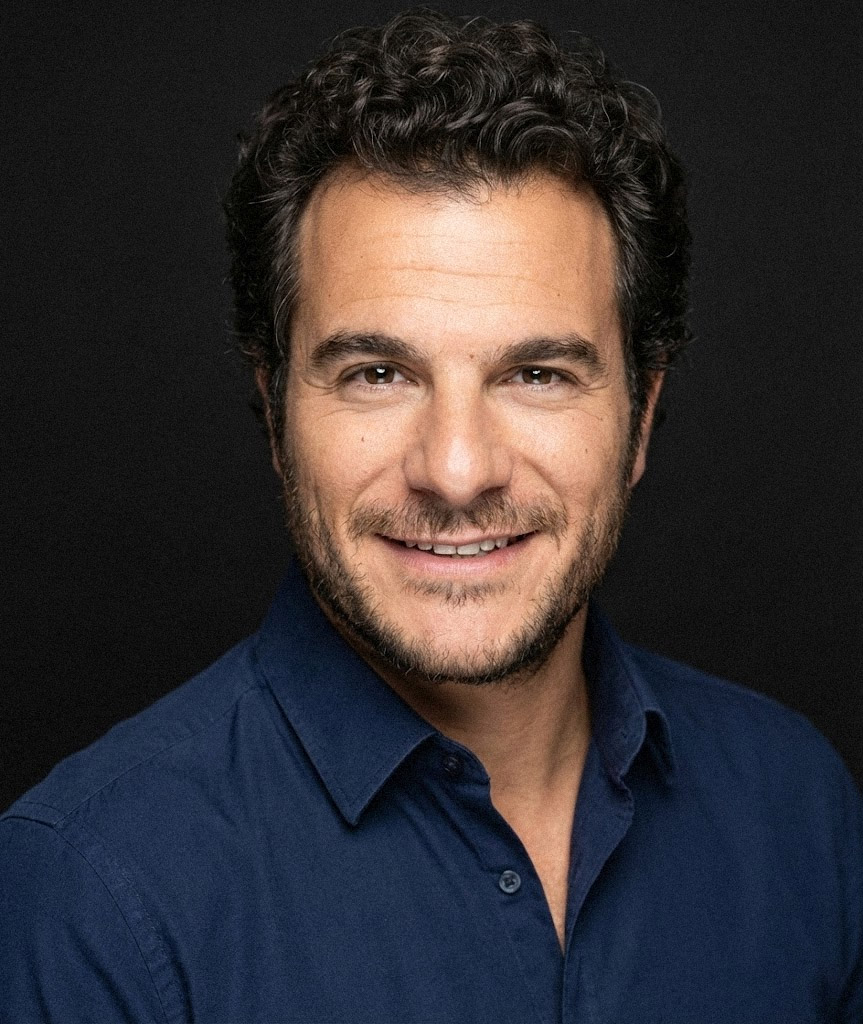
“The idea is not to make cryptoassets the core of the portfolio but to include them as a complementary component — sized appropriately to the investor’s risk profile… set a strategic slice (for example, 1%–3% of the total portfolio), keep a long-term horizon and resist the temptation to react to short-term noise,” Eid wrote in the note, according to the Coindesk summary.
From 60/40 to 60/40/2 in an FX‑sensitive market
For institutional allocators, the signal is less about headline bullishness and more about normalization. A legacy house in a high‑inflation, FX‑exposed economy is now explicitly treating bitcoin as another risk bucket in the optimizer, not an off‑menu trade. In practice, Itaú is pointing clients toward regulated wrappers such as locally listed bitcoin ETFs like BITI11 on B3 – vehicles that already embed Brazilian tax, custody, and reporting rails – reducing operational friction for pensions, family offices, and private‑bank books that cannot touch offshore exchanges.
In the classic 60/40 framing, Brazilian allocators face two structural problems: domestic fixed income and equities both embed local macro and FX risk, and the real has a track record of sharp repricings when global dollar liquidity tightens. A 1%–3% BTC sleeve – implemented via ETFs or global mandates – gives portfolios a liquid, cross‑border risk asset whose drivers are more global and less tied to Brasília or the real’s path, even if spot BTC itself trades with high volatility.
LatAm follow‑through and the demand vector shift
The Itaú note also lines up with a broader drift inside global wealth management: crypto’s role is shifting from pure upside optionality to a small, rule‑based hedge against fiat debasement, correlation spikes, and ETF‑driven equity crowding. If other Brazilian and LatAm asset managers adopt similar policy bands, the region could become a structural buyer of BTC via FX‑hedge allocations, independent of short‑term halving narratives.
Flows from even a few basis points of rebalancing matter at the margin. Brazil hosts one of the world’s deeper local institutional pools; if mandates that historically stopped at gold and offshore S&P add a 1%–3% BTC line item, ETF desks and market makers will need to source coins on a recurring schedule rather than just during speculative waves. That points to a new demand leg anchored in currency risk management and portfolio theory, not social‑media‑driven momentum.